
Read Time: 3 Minutes
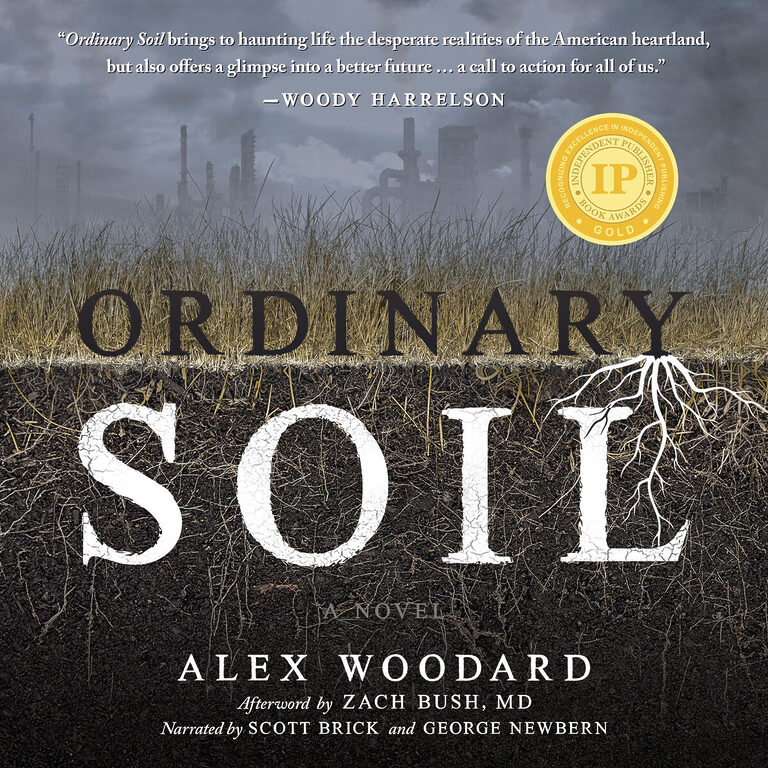
Ordinary Soil by Alex Woodard is a story rooted in farmland, family history, and the creeping sickness born of pesticides in the soil and past secrets. It opens with Jake, who crashes his car into the old elm tree on his property in an attempted suicide, then backs up to show how the weight of generations has led him here.
The tree itself has been standing since the 1800s, planted when his Native American ancestor still tended the land before being forced into “assimilation.” That loss of knowledge, like the three sisters planting of corn, beans, and squash, casts a long shadow over everything that follows. The land and ancestors remember, and they’re making their displeasure known.
Most of the book stays in the modern day, but it feels haunted by the past. Jake has seen a terrifying figure lurking in the fields since childhood, a vision that connects directly to the farm’s history. Layered on top of that is a more present-day horror: sickness spreading across the county, traced back to the chemicals and poisons saturating the crops.
Because of this, the story straddles genres: part agricultural drama, part medical mystery, with flashes of psychological horror whenever Jake’s visions creep into the light, making it hard to pin down just one category. At its core, it’s a literary novel with elements of psychological tension, layered with social commentary on pesticides, environmental decay, and the costs of ignoring the land’s wisdom.
At times the book leans harder on its message about environmental damage and pesticides than it does on character work, but the balance usually holds. I did think it could easily drop into too preachy but for the most part it was about getting the message across. Jake’s personal unravelling and slow recovery makes the bigger commentary land with more weight than it might have on its own. It’s that mix of intimate and expansive that kept me listening.
It isn’t just about what’s happening on Jake’s farm, but about the way one piece of land can ripple out through history, through families, and into the lives of people who may not even realise how deep those roots run.
The narration keeps things steady, clear, and measured and well-fitted for the story which moved between family drama and creeping dread. If I had to choose, Scott Brick was my standout of the two narrators. George Newbern wasn’t bad, don’t get me wrong, but for me Brick’s was my preferred. A couple of technical issues (I noted them back to the producers so they could fix) where there’s nothing at all – it just goes silent in the middle of a chapter. Happened a couple of times, and I assume just a technical glitch that will get fixed.
So overall, Ordinary Soil is a strange, unsettling listen. Somewhat bleak in places, thoughtful in others, but it stuck with me and really made me think about the food on my plate. If you want a story that digs deep into the dirt and doesn’t shy away from uncomfortable truths, it’s worth your time.
Want to listen to "Ordinary Soil" free?
You can get Ordinary Soil free with a 30-day Audible trial - no strings attached. Cancel anytime. The free trial of Audible includes one free audiobook of your choice (yep, including Ordinary Soil which you keep it even if you cancel) and unlimited streaming from the Audible Plus catalogue.
Need more than just one? Audible's Premium Plus plan includes up to 24 credits and full access to and the entire Audible Plus catalogue.
Start your free Audible trial
Explore what's included with Premium Plus
Note: These are affiliate links, which means we may earn a small commission if you decide to sign up. It doesn't cost you anything extra, and it helps support our site! ♥